
It was worth it.
The calls back and forth for the last few weeks, making arrangements, the delayed flight where I never got coffee, the unimaginably bumpy, five-hour-long ride cab ride, waking up at 6 am…all of it was worth it for this view.

No, this is not the Grand Canyon.
This is Gandikota, a somewhat-ruined yet inhabited medieval fort, walled-in by this beautiful gorge, made by a persistent Pennar river cutting through pink granite stone for centuries, tucked away deep in the heart of Andhra Pradesh, in India.
A couple of years ago I was working with Live History India, a pioneering venture that seeks to give the incredibly exciting and fascinating history of India, the attention it deserves. As Assistant Editor, it was part of my job to check every article before it went up on the website. It was thus that I first read about ‘Gandikota: The Grand Canyon of India’. As you can see, it’s not an image one forgets easily. So a few months later, when I was given the opportunity to visit Gandikota as part of a collaboration with the Andhra Pradesh Tourism Development Corporation, to showcase lesser-known historical gems across the state, I jumped at the chance.
I will not attempt to delve into the history of this fort beyond the fact that it was built in the 13th Century CE by a clan of commanders of the powerful Vijayanagara Empire and changed hands many times including with Mughal Emperor Aurangzeb and the colonial British Empire. The article and video by Live History India do a much better job of explaining this history, aided by stunning visuals.
I’ll just stick to my personal experience at this fort, full of surprises. As we entered the perimeter of the fort through a zigzag maze of an entrance, I realized that it was still home to little villages and settlements, scattered across the wilderness that has overtaken this once grand fort or ‘kota’. At the time we visited, these villages were facing electricity and water shortages, especially given their remote location. Hopefully, as the area attracts more tourism, things will improve.
The fort is also home to a number of beautiful buildings, which though abandoned, are in a surprisingly good condition. These structures that still stand strong, hark back to its prosperous past.
The first one we entered was the sprawling and elegant Jamia Masjid, adorned with minarets, arches, built during the reign of the Qutub Shahi kings of Hyderabad.

Next to it are the granary and a water tank which is called ‘Kathula Koneru’ by the locals. The name means ‘Pond of Swords’ because it is believed that kings used to wash their swords in this pond after a war.

Walking a little further ahead, we came upon the enchanting Ranganathaswamy Temple. Perched on a hill, the temple is slightly in ruins, but the beautiful pillars with sculptures of Dasavathara stories are still pretty much intact.

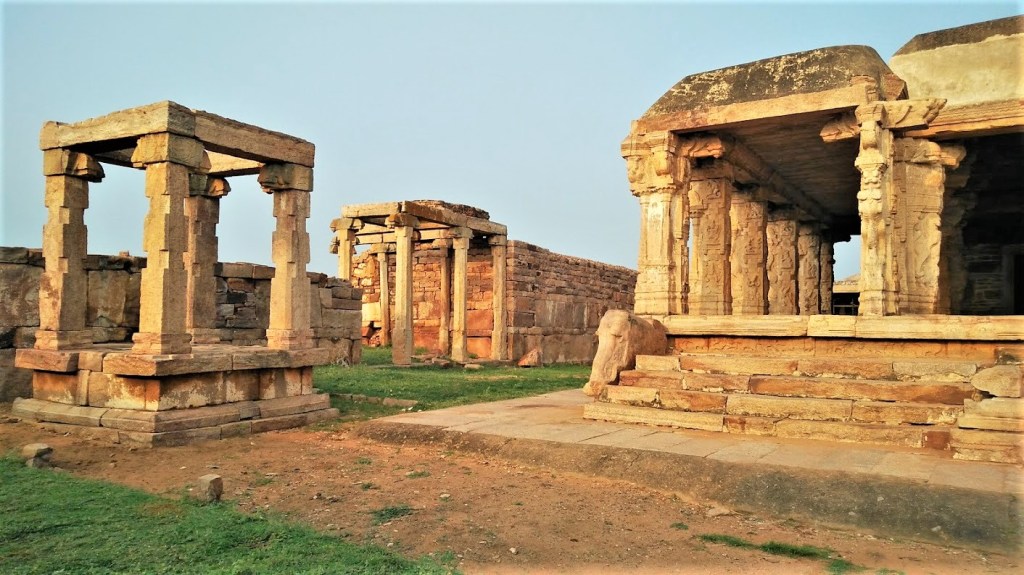
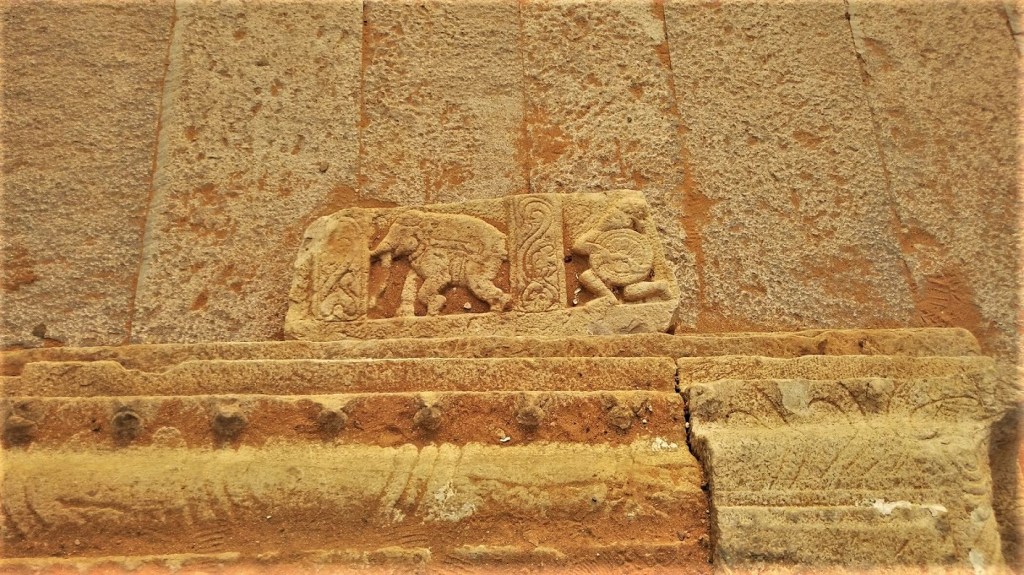
After marveling at the sculptures for a bit, we made our way to our next destination, a few minutes’ trek away- the Madhavarayaswamy Temple
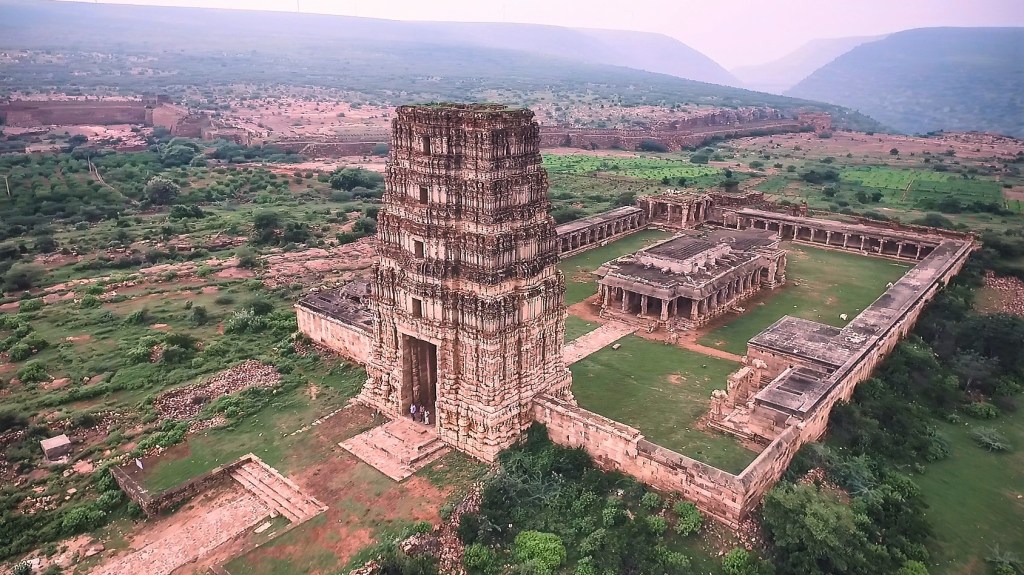
This temple is one of the grandest buildings in the fort. It is in good condition, the sculpted pillars and ornate mandapa almost intact. The wide-open spaces inside the temple complex, with the sanctum in the center and corridors on the side led me to think that this may have been where festivals and mass gatherings for the inhabitants of the fort must have taken place in Gandikota’s royal past.


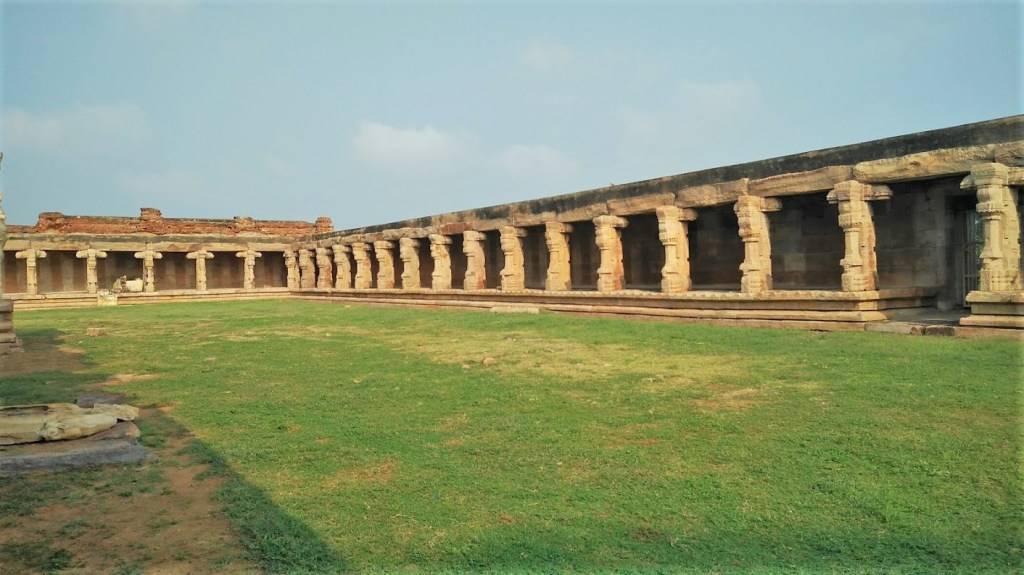
As my colleague went around skillfully capturing these amazing views on his camera, my thoughts and I wandered. Here was an absolute treasure trove of history and art, that I had never known existed until a few months ago. How many such secret gems were hidden away all over this country, given its long, rich and eventful history? The list would be endless. In India, there will never be a dearth of places to discover for anyone who loves to travel.
It had been an exciting day, and we had seen some genuine, timeless beauty. All through our exploration of the fort, there had been a vague sense of dissociation from the present, like being in another time altogether. We were tired, happy and more than a little philosophical.
But the day wasn’t done yet, we had saved the best for the last.
We stood on the edge of the gorge or ‘gandi’ as its called in Telugu, with the ‘kota’ behind us. And we looked across the calm Pennar river, which had cut through the jagged cliffs of pink-orange rock to create this gorge, watching the sunset, like so many kings and queens had done, for so many centuries before us.
Travel Tips
- Gandikota lies in the Kadapa District in Andhra Pradesh and is accessible mostly by road. The nearest airports are Bengaluru and Tirupati, while the nearest train stations are Muddanuru and Gooty. One can also take a bus from Jammalamadugu.
- Keep in mind that the fort is at a slightly isolated location. If the option of travelling by car is available to you, I would strongly recommend doing that. The only option for accommodation near the fort is the Haritha Resort run by APTDC. The resort is quite nice, with individual villas and a basic but adequate restaurant.
- Though cars can get close to the gorge, they can’t go all the way so make sure you dress in comfortable clothing that lends itself to walking through some wild, overgrown pathways/ climbing over rocks and sports shoes with a good grip.
- Cellular and internet connectivity in the area is pretty low, so be prepared to drive around for a bit looking for a signal or else to just use your phone as a camera.
- You could also visit Belum caves, the longest caves on the Indian Subcontinent, which are also known for their stalactite and stalagmite formations. The caves are about 60 kms (1 hr 30 mins approx) from Haritha Resort.

 Excess Baggage