
I gratefully sipped my hot tea, sitting on the roof terrace of the hotel, watching the fog lift and reveal a lake so still, it looked like a mirror. Not a bad way to start the day or the year. Certainly a fitting welcome in Rajasthan’s ‘city of lakes’, Udaipur.
I have a fascination with waking up to see the sunrise when I visit a new place. The sight of a new destination being slowly revealed as the run ascends is very thrilling to me. The only problem is that I seldom manage to actually wake up for this. Suffice it to say that I am just not a morning person.
This was one of the rare times I actually woke up and dragged my poor mom out of bed too. As we made our way to the roof, a staff member at the small, quaint family-run hotel saw us and insisted on bringing up a pot of hot, fresh tea in five minutes. Indian hospitality is truly unmatched.
He joined us and while we watched Lake Pichola come to life, we planned out the day ahead.
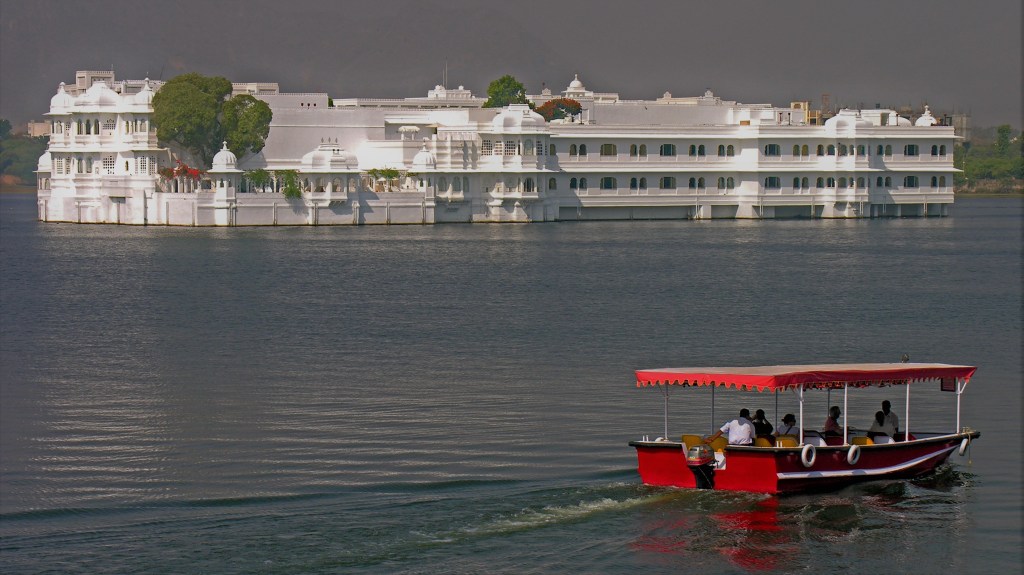
A historic, royal city, Udaipur has a well-earned tag as one of the top tourist destinations in India. Founded in 1553 by Maharana Udai Singh, it became the new capital of Mewar after Chittorgarh. Today its an exotic destination for modern, capitalist royalty from around the world. Many of its palaces have been converted into luxury hotels run by some of the top hotel chains in India. For instance, Jag Niwas, built in 1746 CE is now Taj Lake Palace, whose staff very politely refused my many requests to join the heritage walk as I wasn’t a guest paying Rs. 25,000 to stay there. Truly an authentic experience of royalty.

Thankfully, the iconic City Palace is still open to all and its the perfect place to start exploring Udaipur. The place which started construction in 1559 CE, is almost an architectural collage as every ruler till the 18th century CE added his own bits and parts to it. In fact, the royal family of Mewar still lives in a section of the Palace.
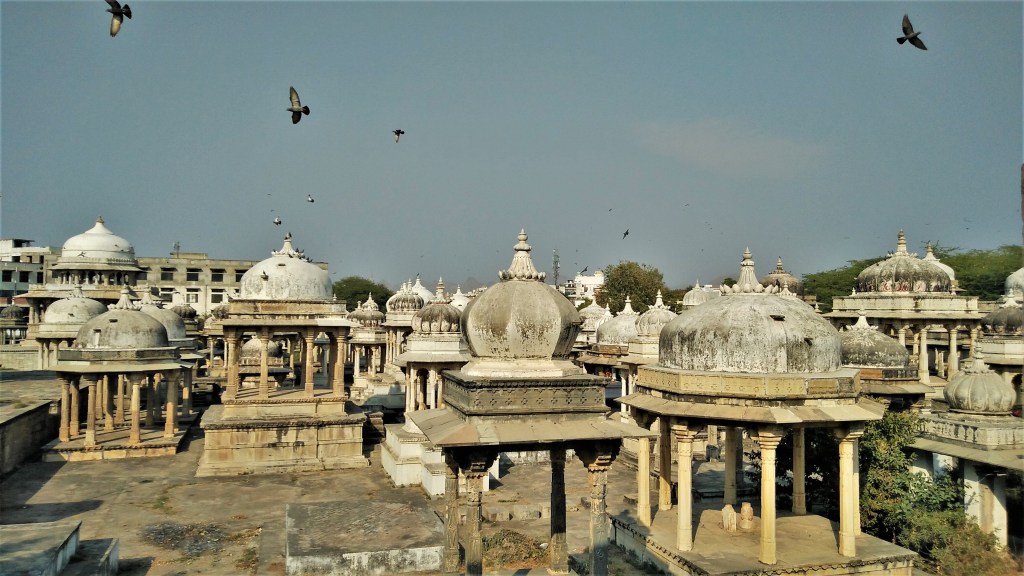
After a couple of hours wandering around the glittering rooms, we headed to a lesser-known and considerably less lively historic monument, the Ahar Cenotaphs. These are a collection of 372 cenotaphs or memorials, dedicated to the deceased members of the royal family of Mewar. I did a piece on these for a pioneering digital media startup I was working with because it is a truly unique, if eerie sight. Known as Mahasatyaji locally (please don’t be an idiot and say ‘cenotaphs’ to the rickshaw driver as I did), the complex is apparently ‘under restoration’ but when I went it just looked abandoned. But even in ruins, the cenotaphs are a stunning sight, varying in size and built over 400 years.

One of the biggest is that of Rana Sangram Singh, who was cremated here in 1734 CE. Legend has it that all of his 21 wives committed sati by jumping into his funeral pyre as per the spectacularly horrific and misogynistic Indian ‘tradition’.
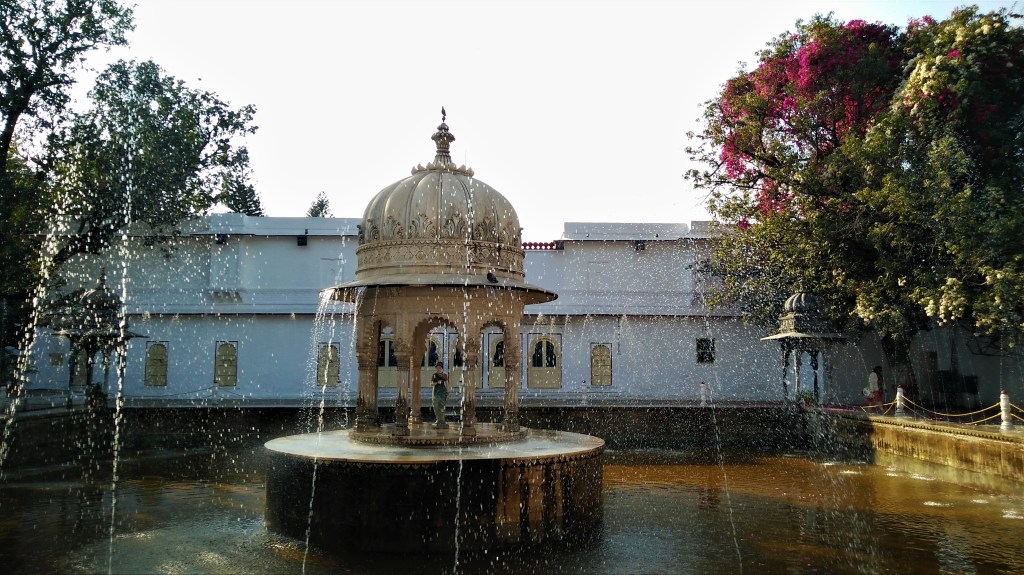
By a lucky coincidence, our next stop was a much more pleasant but equally paternalistic and sexist ‘gift’ that Rana Sangram Singh built before his death and the mass suicide of his wives.
Sahelion ki Bari, which literally translates to ‘garden of the girlfriends’ was built by our man in 1710 CE as a ‘gift’ for one of his queens and the 48 maids that came with her as part of her dowry. Yet another glorious Indian tradition.
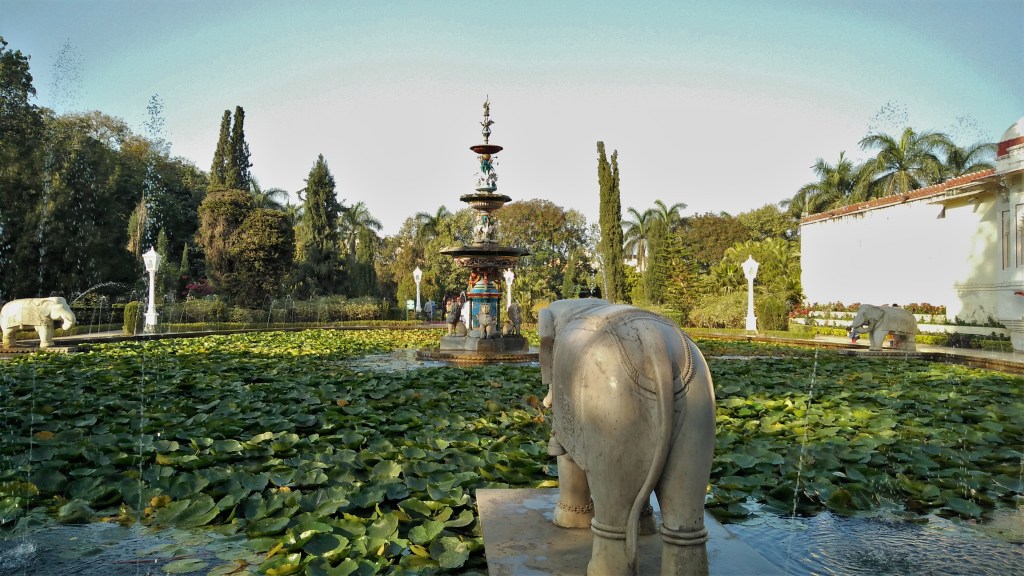
On the bright side, it was a safe haven for the women to relax and unwind away from the pressures and politics of the royal court. It is a beautiful garden complex and engineering marvel as its home to 2000 innovative and purely mechanical fountains that are still fed by the waters of the Fateh Sagar Lake nearby. I had to eventually do a photo essay to do it justice. I would suggest engaging one of the government trained guides at the entrance as there is an abundance of quirks and trivia surrounding this garden, which you will miss out on otherwise.
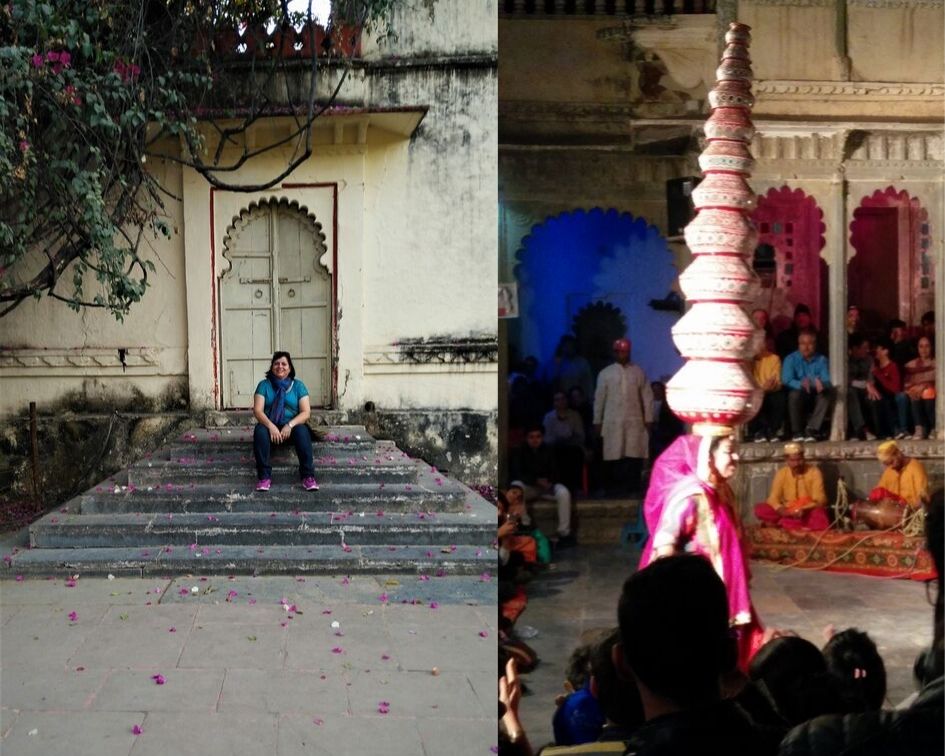
After a day of seeing the physical, tangible heritage of this royal capital, we decided to end the day with a slice of its cultural history. So we headed to Bagore ki Haveli, where folk dancers and musicians from across Rajasthan, put on a captivating show every evening. As I watched a 70-year old lady with 11 pots stacked on her head, glide around the stage gracefully and effortlessly, I couldn’t help but think about historical heritage. On the one hand, India’s history handed down a legacy of discrimination, cruelty, and nepotism. On the other, it created music, art, food, architecture, and literature, enriched with variety and creativity. But like spoilt, bratty children, we love the worst and ignore the best. We cling onto disgusting, idiotic practices of casteism, sexism, religious fanaticism and superstition while traditional art and music struggle to survive. We build giant, crass statues while centuries-old forts are covered with scribbles of ‘Manoj loves Pinky’.
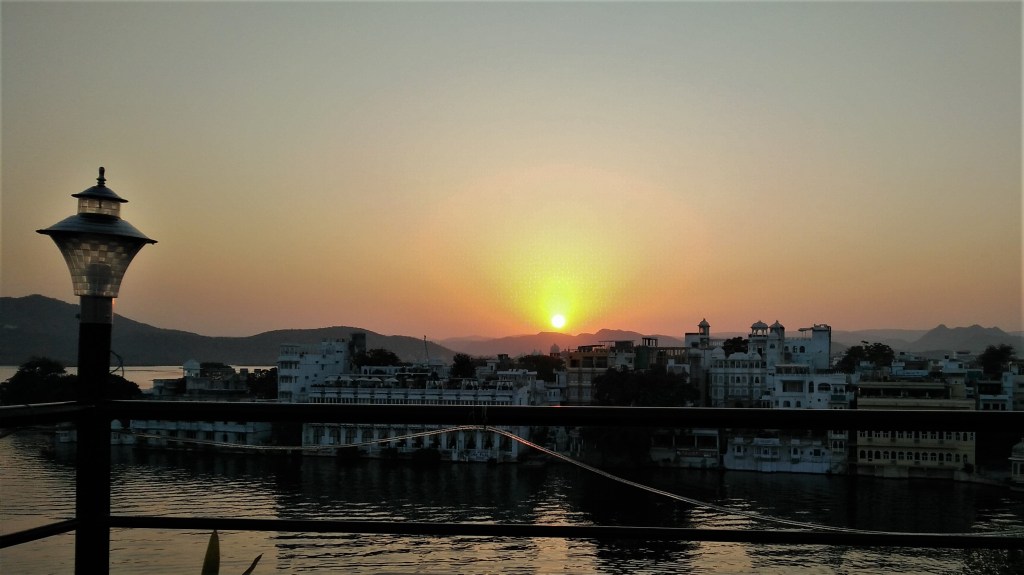
Maybe its time we woke up to the fact that history is not just what we passively stare at in group tours while throwing packets of kurkure around, but a living, growing entity, whose past mistakes and future wisdom all depend on the present. And in many ways, Udaipur with its mix of history, luxury and tourism is symbolic of this balancing act.

 Excess Baggage