
As a child, I had dreamed of this day. I could hardly believe we were really, truly, actually here. That ultimate fantasy of any kid who loves the ocean and its many wonders- SeaWorld.
Playful dolphins, majestic orcas, adorable sea lions…I could barely contain my excitement as we parked and made our way across the gargantuan parking lot.
We rushed to our seats in an amphitheater overlooking a stage with a little water moat around it, to watch the first show of the day, the sea lions. On stage, trainers in costumes started making the sea lions perform tricks like dancing, jumping out of the water and giving high-fives. For a couple of minutes, I was delighted, but as soon as the initial surprise of seeing the sea lions wore off, I started to feel a little uncomfortable watching the beautiful animal doing these juvenile tricks.

I have never understood the obsession with making animals perform ‘human’ gimmicks so this made me feel rather uncomfortable and guilty. Unfortunately, this feeling only intensified through the day.
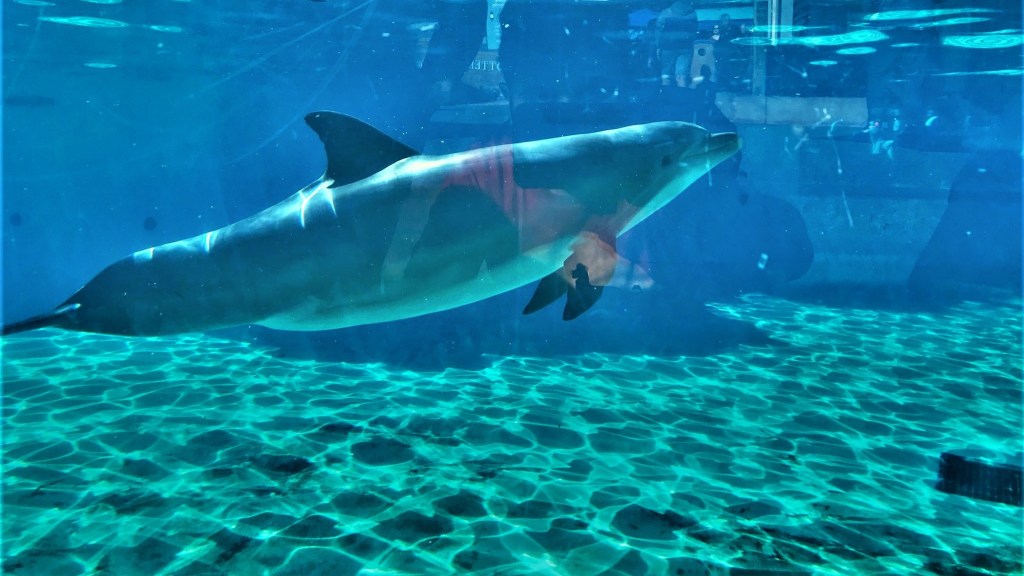
Officially, SeaWorld, San Diego is spread out across 189 acres of land. But only a fraction of this is actually being utilized for the animals. In addition to the huge parking lot, there are ten souvenir shops, clearings, wide boulevards and at least a dozen stalls and restaurants selling junk food and beer.
While we humans have all this space to entertain ourselves, at the dolphin show, we were told that 40 dolphins live in a pool that does not by any means look big enough for that number. They perform all day too and though their tricks are not as crass as the sea lions, they are petted by hundreds of people every day.
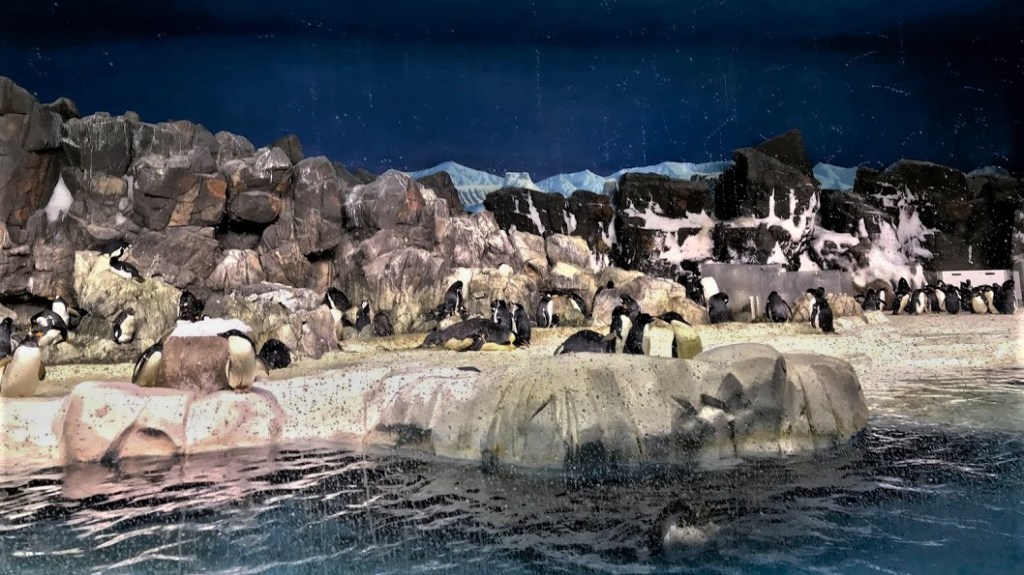
Next came the penguin enclosure where around 300 penguins are all crammed onto a patch of fake ice. While I am aware that penguins tend to live in close quarters even in the wild, there they have the option of spreading out or moving around as they choose. Here dozens of people get on a conveyor belt as the staff explains how wonderfully they care for the penguins, who simply stand there looking cute as buttons.
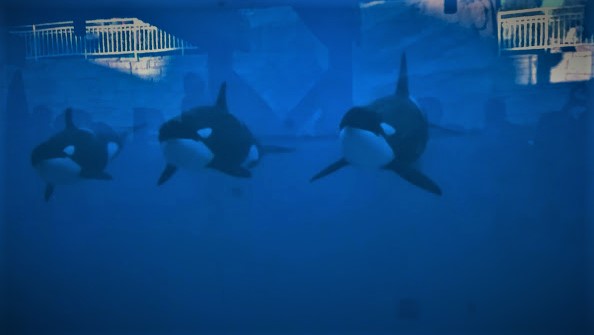
And then there are the orcas. Beautiful, highly intelligent and with complex personalities, killer whales or orcas are some of the most amazing creatures of the sea. In fact, it was an orca that propelled Sea World, San Diego to fame in the late 1960s.

Shamu was the first orca intentionally captured from the wild by SeaWorld. After watching her mother being killed with a harpoon and then being forcibly brought here, she was taught tricks by cruel means such as withholding food. Once she started to perform, she soon became the star attraction at the park. But captivity and trauma caught up with her eventually and she attacked a park employee in 1971, who was trying to ride her for a televised publicity event. The employee survived but Shamu was retired and died four months later. By this time, she was so popular that the name ‘Shamu’ was trademarked and used for all future orca shows at Sea World.

Another such tragic event occurred in 2010 when an orca named Tilikum attacked Dawn Brancheau, his highly experienced trainer, dragging her into the water and killing her right in the middle of a show, in front of a horrified audience at Sea World, Orlando.
Though tragic, maybe such incidents should not be entirely unexpected. According to a National Geographic article from earlier this year, ‘Orcas are massive animals that swim vast distances in the wild—40 miles a day on average—not just because they can, but because they need to, to forage for their varied diets and to exercise. They dive 100 to 500 feet, several times a day, every day’. For such an animal to spend decades locked into a pool would do irreparable damage, mentally, physically and emotionally
This incident was also the subject of a 2013 CNN documentary called ‘Blackfish’ which became wildly popular and sparked so much outrage against SeaWorld, that the theme park’s resulting steep decline in sales was informally dubbed ‘The Blackfish Effect’.

In fact, perhaps the fact the SeaWorld is a tacky gimmick shouldn’t come as such a shock given its history. It was founded in 1964 by four UCLA grads who intended for it to be an underwater restaurant and marine show. When that idea was found unfeasible, they made it a park. It has since changed hands from one ultra-capitalist owner to another, from publisher Harcourt to brewing company Anheuser-Busch (AB InBev), the Blackstone Group and China’s Zhonghong Zhuoye Group Co.
Just in case there were any doubts about priorities here.

I spoke to a very close friend who is a marine biologist to understand if maybe I was overreacting. Not surprisingly, she said she had the exact same experience as us. She went in excited and came out disturbed. She clarified, however, that she wasn’t completely against zoos and marine parks, as long as their primary aim is the rescue and care of the animals themselves, citing Brevard Zoo, Florida and Waikiki Aquarium, Oahu as examples, having worked there herself in the past.

With its vast resources and deep pockets, SeaWorld can and should do better. SeaWorld Parks & Entertainment operates 12 U.S. theme parks including 3 SeaWorlds (San Diego, Orlando and San Antonio) made just over $220 million in revenues in FY2018-19.

To counter all the bad press it gets, SeaWorld also runs rescue and rehabilitation programs for marine animals but after visiting the park, I am skeptical about how reliable and accurate their claims and figures are.
They make lofty claims about wanting to spread awareness about marine life and spread awareness, but is this really we should be learning? That we have the right to cage up even the most intelligent and fearsome creatures of the sea and make them perform tawdry tricks for our brainless entertainment?

I have had a starfish voluntarily crawl across my hand, watched a whale leap out in the open ocean, snorkeled among manta rays in Hawaii, and had the curious and friendly rays swim up barely a couple of inches from my face. The thrill of these experiences will stay with me for the rest of my life. Trust me, watching these lovely animals float aimlessly behind a glass pane or perform tricks, does not even begin to compare.
With local and sustainable eco-tourism industries growing globally, unique and responsible experiences are easily available and often much more cost-effective than a $100 trip to SeaWorld.
In hindsight, our visit to SeaWorld was an eyeopener. I know now, without a doubt that instead of macabre, artificial scams like this ‘amusement’ park, I would rather invest my time and money in the the actual sea world admiring all the happy, free and fabulous creatures that call it home.
With inputs from Mugdha Bansode, Marine Biologist and Science Communicator. She holds a MS in Marine Biology from Florida Institute of Technology and has done pioneering work with organizations like Sustainable Coastlines Hawaii and Nautilus Live.

 Excess Baggage