
For a moment, I thought I was hallucinating. Or maybe I managed to teleport somehow?
How else could I make sense of the fact that on our way to Coorg we were…in Tibet?
We had left Bengaluru about 4 hours ago, headed to Coorg for a weekend in the misty hills.
An hour away from our destination, we started looking for a good meal and this led to one of the most serendipitous surprises I have ever encountered while traveling.
As we followed the signs marked ‘Bylakuppe’ and ‘Camp 1’ I did some quick reading online and soon I was jumping in excitement. Just off the SH 88, 90 kilometers from Mysore, this hidden gem is the second largest Tibetan settlement in India and the world, after Dharamshala in Himachal Pradesh.
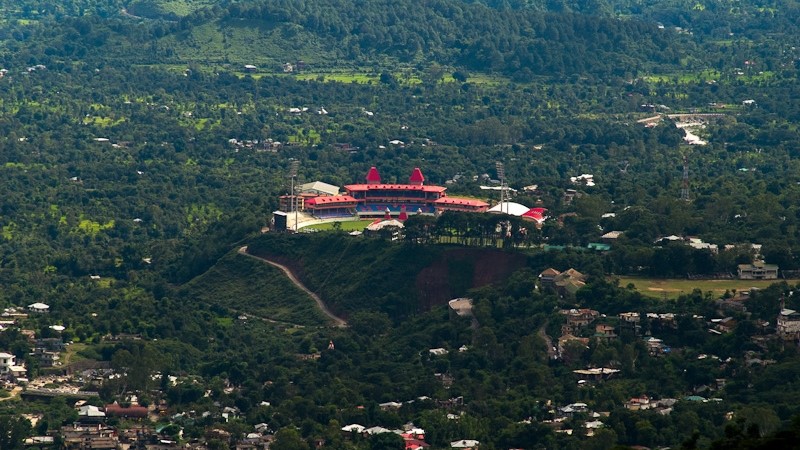
Here we were, driving through what I always imagined rural Tibet to look like, quiet and quaint, passing by houses with sloped roofs and prayer flags strung across courtyards, in Kodagu district in Karnataka.

Lugszungbsamgrubgling is the official name of this settlement established in 1961 but since that’s quite a mouthful to pronounce, its usually referred to by the names of the towns closest to it, Bylakuppe and Kushalnagar or simply as ‘Camp 1’. Subsequently, three more camps were added, spreading across 3000 acres.

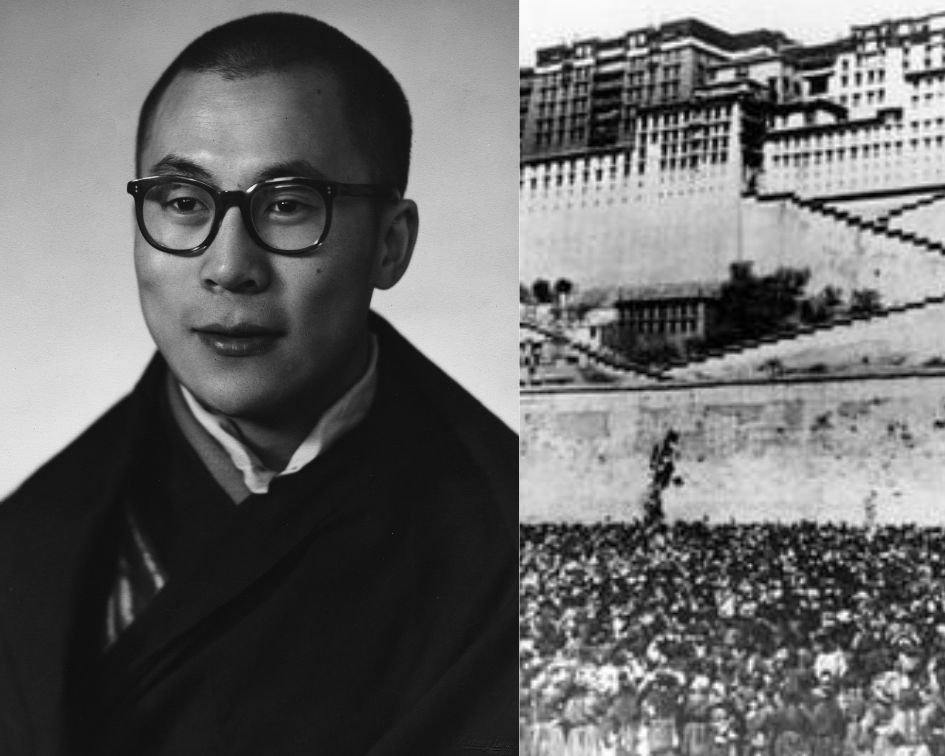
If the word ‘camp’ seems too rudimentary for this beautiful oasis, it is because the name is a remnant of a painful past. Tibetans have been seeking asylum in India since the forceful occupation of their homeland by Chinese Communist forces in 1951. On 10 March 1959, the then 18 year old Dalai Lama fled to India after a failed uprising against the occupation by Mao Zedong’s Peoples Liberation Army in Lhasa, the Tibetan capital. Since the ‘Lhasa Uprising’ the Tibetan spiritual and political leader has lived in Dharamshala, and more than 100,000 Tibetans who followed suit, now live in 39 formal settlements across India.

As we entered this one, I knew no matter what else we found here, the food would be fantastic. I was proved right at the end of a memorable and very affordable meal of beef fry, Bhutanese emadatsi (goat’s cheese and green chilli stew) wiped up with steaming hot tingmo, at Potala Kitchen.

Full and curious, we made our way to one of Bylakuppe’s most famous landmarks- Namdroling Monastery. Locally referred to as the Golden Temple, we walked through the gates amidst a mixed crowd of monks of all ages dressed in crimson robes and a handful of Indian and foreign tourists. The monastery was established by His Holiness Penor Rinpoche as a 9×9 feet bamboo structure in 1963. It started out with only 10 monks then, but today it is home to over 8,000 monks.
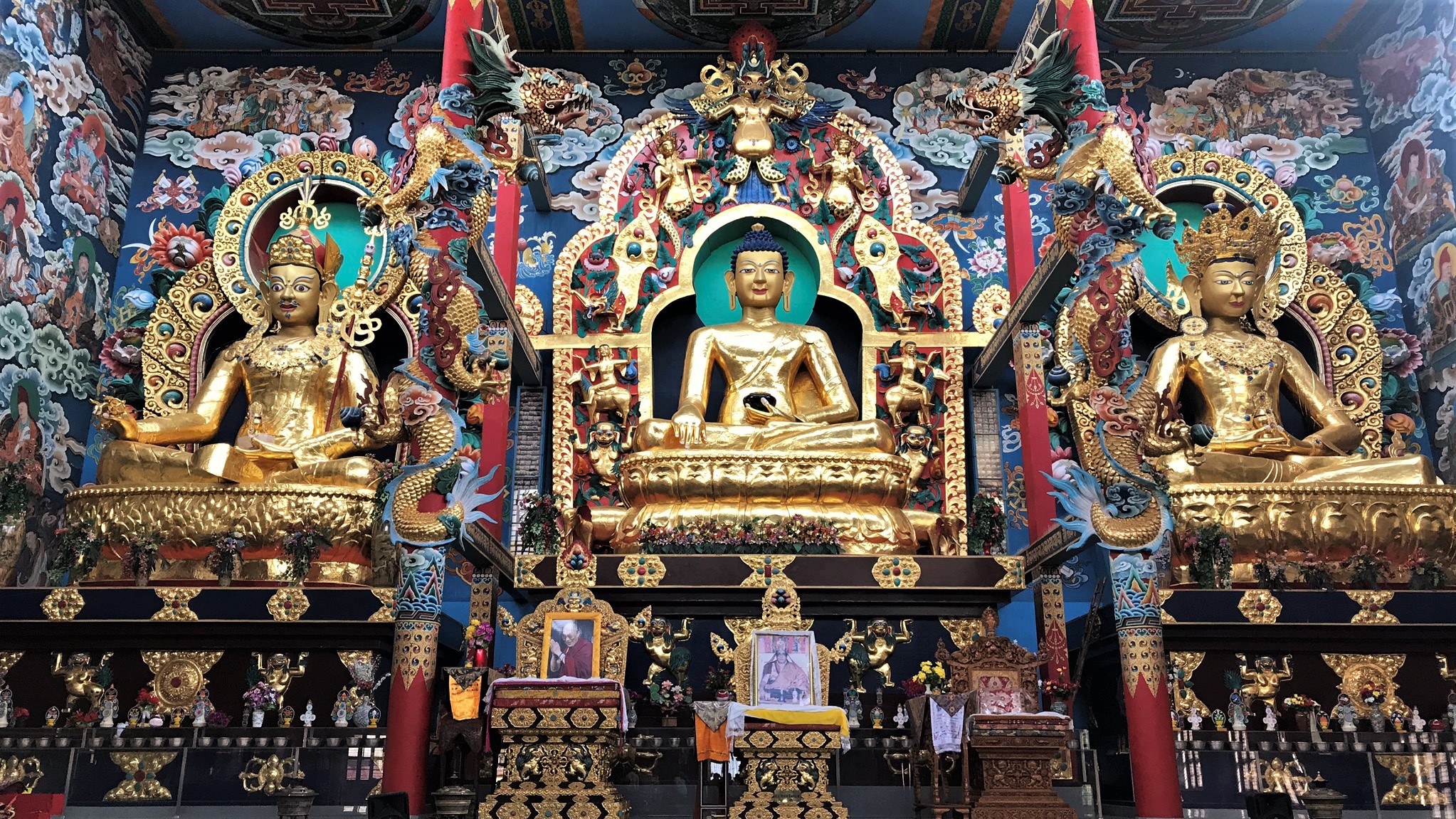

Built in the Nyingma tradition, the monastery’s main temple is home to three 60 ft tall, gold-plated statues of Buddha Shakyamuni, Guru Padmasambhava, and Buddha Amitayus. These are adorned with scriptures, relics, small statues, and clay stupas, making for an impressive sight.

Eventually, it was time for us to continue our journey to Coorg, but I didn’t feel like leaving. My reluctance made me wonder about how hard it must have been for the Tibetans to first move here, escaping a home they clearly never wanted to leave.
Nobody except those who have endured it can ever understand the pain, the resilience and the struggles of a displaced community. Even when we make a planned move to a new place, most of us often spend weeks or months planning ahead, lining up jobs, searching for houses and reaching out to friends. We can’t even begin to imagine the fear and trauma of having to leave our whole lives, everyone and everything we know behind, overnight, with no idea of what awaits on the other side.
But looking around, the spirit and grit of this community had created something truly beautiful and unique.


The proud Tibetans, exiled from their home have formed a peaceful, dignified, tight-knit community, focused on preserving their traditions and way of life, regardless of where they live. They have made their home, in a whole new land.
Though its something that communities have done world over, creating their own little islands in foreign lands, I never fully appreciated it as well as I did in that moment. I always thought it prevented displaced communities from fully assimilating with their new homes. But here, for the first time, I realized that it was a natural instinct, the coming together of a group of people that shared the same memory of pain and loss, hope and survival. All held together by that unforgettable memory of a lost home.
With these thoughts, at sunset, driving through gently winding roads, flanked by green fields and dotted with red rooftops and gold pagodas in the distance, this little microcosm of Tibet in Karnataka crystallized into an unforgettable memory for me.

 Excess Baggage